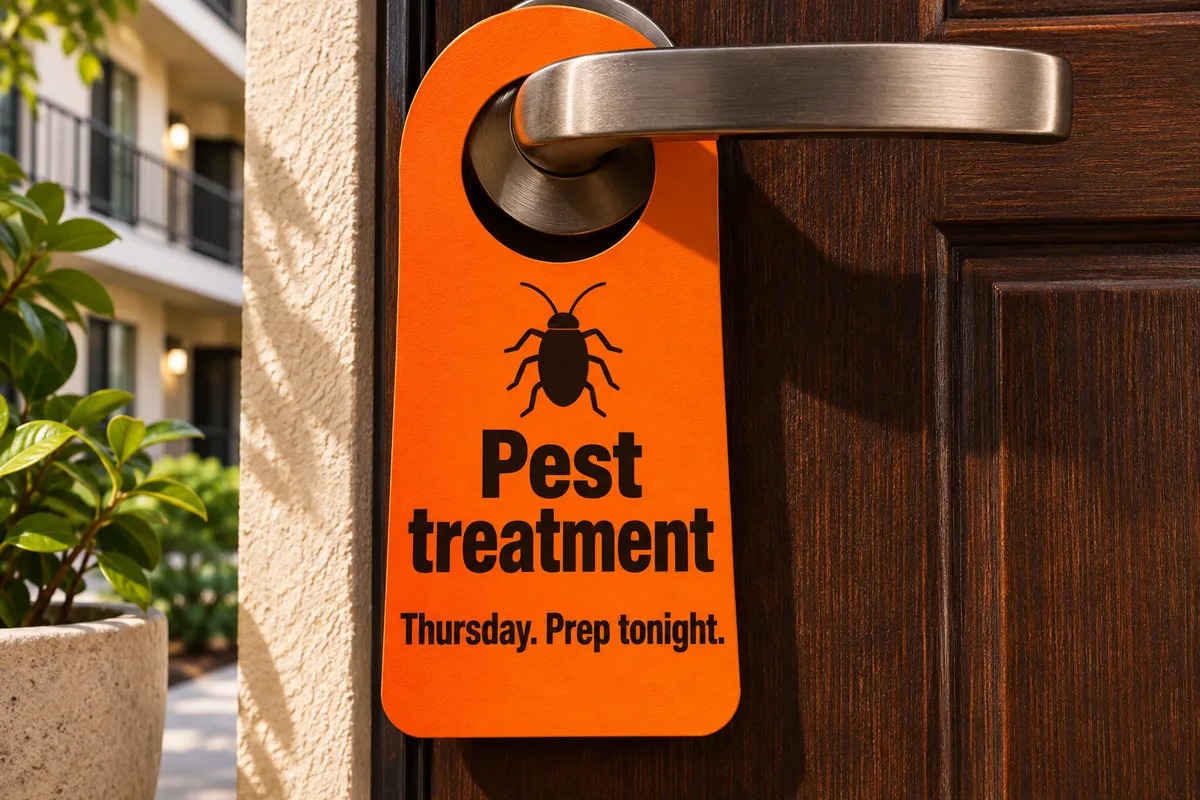
Why pest control notices go wrong
Three parties depend on this one notice. The vendor needs access and a prepared unit, or the treatment does not work and they may charge for a return visit. The resident needs to know when someone will enter, what to move and when it is safe to come back. You sit between them, and you hear from both when it goes badly.
Most failures are simple. The notice says "pest control will be on site Tuesday" and nothing else. The resident does not know a technician will come inside, so they leave the dog home. Or they never see the part about clearing the cabinets, so the technician treats half the kitchen or skips the unit. A week later the roaches are back, and the resident is asking why the treatment failed.
A good notice answers the resident's real questions, in order: when, do you need to get in, what do I have to do, is it safe for my kids and my cat, and who do I call. Everything else is decoration. Keep it short enough to read on a phone, and move the longer preparation list to a separate sheet.
This is a working template, not legal advice. Entry notice periods, pesticide notification, who pays for treatment and required wording depend on your lease and on state and local law. Check yours with your own counsel before using it.
What the notice has to say
Rules for this notice come from more than one place. Your lease and your state and local law set how much notice you owe before entering a home, and how you must deliver it. Some places also have their own rules on notifying residents about pesticide use, and those can be separate from the entry rules. Rules vary by state and lease, so have your counsel confirm yours once, then build the answer into your template.
The practical details come from the vendor. Ask them for the preparation steps, what they will use, and how long people and pets should stay out, in writing and for that specific treatment. Do not write those details from memory or copy them from last year's notice, because they change with the product and the pest. Our notice of entry template covers the entry side in more depth.
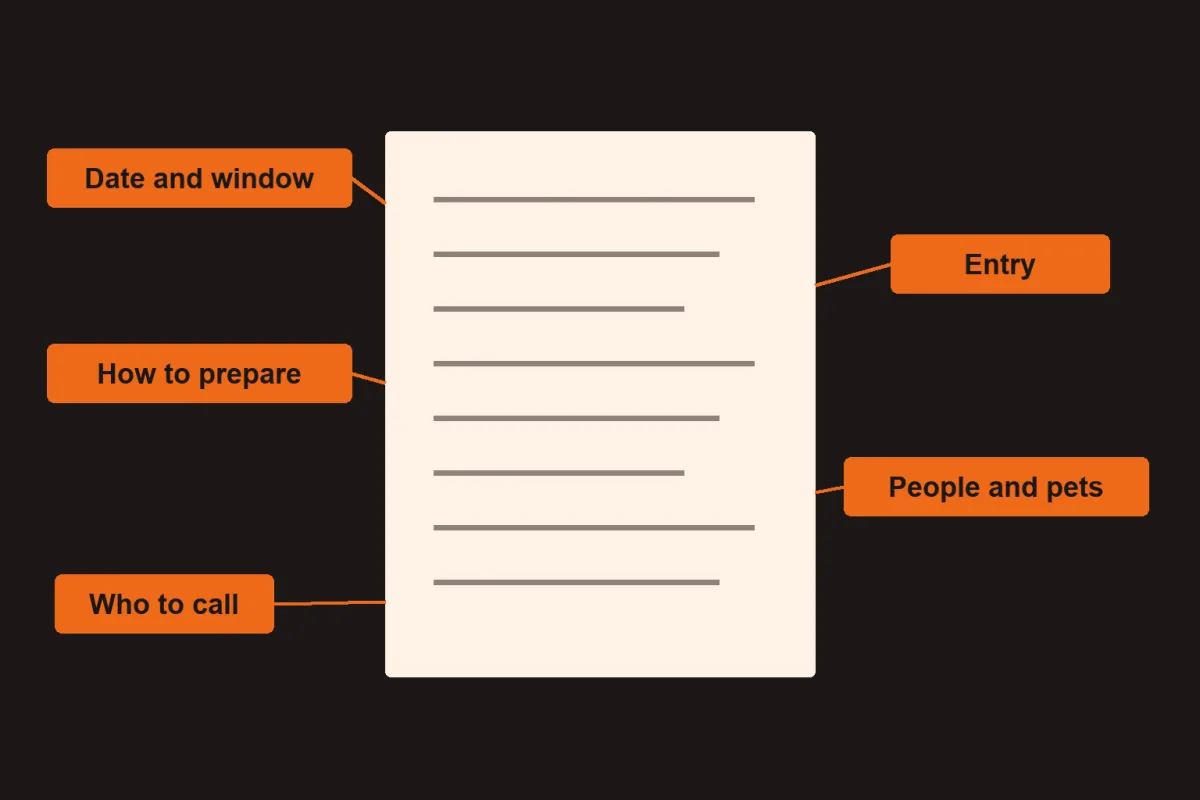
| Line in the notice | What to write | Where the answer comes from |
|---|---|---|
| Date and time window | A real window, with the date and day of the week | Vendor schedule |
| Entry | That a technician will enter, with or without the resident home | Your lease and local law |
| Who | Vendor name, and who will let them in | Work order |
| What and why | Which pest, which areas, and the product if your rules require it | Vendor |
| Preparation | A short list, with the full sheet attached | Vendor |
| People and pets | Who should stay out, and how long | Vendor and product label |
| Questions and concerns | Who to call, and by when | You |
The last row has a job beyond courtesy. A resident who is pregnant, has asthma or has a sensitivity may need a different date or more information, and you want to hear about that before the technician arrives. Give them a way to raise it, and send those requests to a person, because a health or accommodation question is not one for a form reply.
The notice template
Use this as a starting point and change anything your lease or counsel requires. The template assumes a routine treatment you scheduled. If you are responding to one resident's report, keep the wording neutral, and do not name the unit where the problem started.
Pest treatment at [property] on [day, date]
Dear [resident / residents of building],
[Vendor name] will treat for [pest] at [units or areas] on [day, date] between [time] and [time].
Entry. A technician will need to enter your home. [Staff name or role] will be with them. You do not need to be home. This is your notice under [lease section or "your lease"].
Please prepare by [time]. The attached sheet lists what to do. The main steps are: [step], [step], [step]. If the home is not prepared, the treatment may not work, and we may have to reschedule.
People and pets. [Vendor's instruction on who should leave, for how long, and what to do with pets, fish and food.]
Tell us by [date] if you have a health concern, a pet that cannot be moved, or a problem with this time. Contact [name, phone, email].
Thank you,
[name, company, phone]
The prep sheet
Keep the notice short by moving preparation to one attached page. Build it from what your vendor sends you, and replace their technical language with plain instructions. "Remove all items from kitchen cabinets" is good. "Ensure access to harborage areas" will get you an unprepared kitchen.
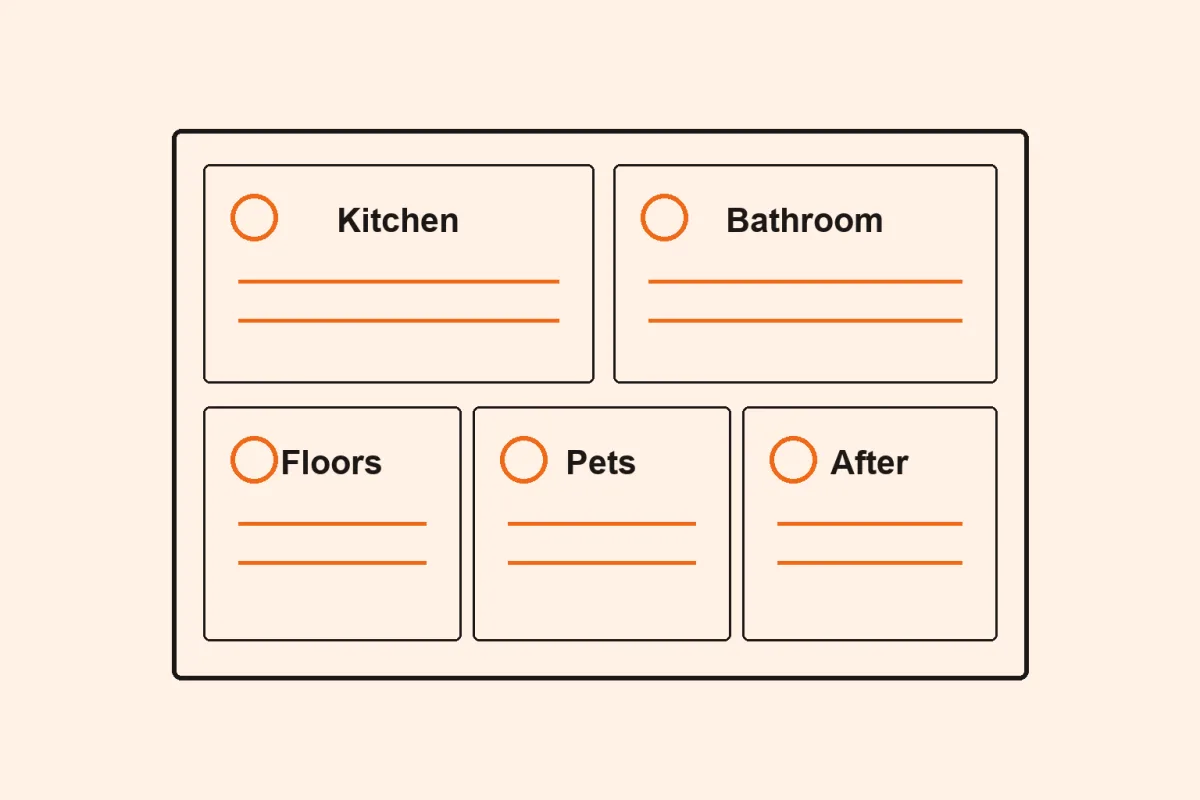
The steps differ by pest, and sometimes a lot. A roach treatment usually focuses on kitchens and bathrooms. Bed bug treatments can involve bedding, clothing and furniture, and they need far more from the resident, so that sheet should come from the vendor. The table shows the shape of a sheet. Your vendor fills in what applies.
| Area | Example instruction, confirm with your vendor |
|---|---|
| Kitchen | Empty cabinets and drawers if the vendor asks, cover or store food, clear counters |
| Bathroom | Clear under the sink, put away toothbrushes and towels |
| Floors and walls | Move items away from baseboards so the technician can reach them |
| Pets | Where they should be during and after, and what to do with fish tanks |
| After | When to return, whether to air the home, what not to clean right away |
The reminder
A notice sent well ahead is easy to forget by the day. A short text or email the day before catches people who set it aside, and it costs nothing. It does not replace the formal notice. It only points back to it, so you still need the first one delivered the way your lease says.
Save a copy of what went out and when, for each unit. If a resident later says nobody told them, or the vendor bills for a wasted visit, that record settles the question quickly. A note on the work order with the send date and the method is usually enough.
Reminder: pest treatment tomorrow
Reminder: [vendor] will treat your home tomorrow, [day, date], between [time] and [time]. Please finish preparing by [time], using the sheet we sent on [date]. Questions: [phone].
One treatment, from booking to log
Count back from the treatment date. If the notice period no longer fits, move the date.
A walkthrough: one building treatment
Say a resident in a twelve-unit building reports roaches in the kitchen, and the vendor recommends treating the whole stack. The coordinator gets a date, a window and a prep list in writing, then counts back from that date using the entry notice period in the lease. It fits, so the date holds.
The notice goes to all affected units with the prep sheet attached. It says which areas will be treated, without saying which unit reported the problem. Two replies come in. One resident has a new baby and asks about the product, so the coordinator gets the vendor's information to them and books the unit for later in the week, as the vendor suggests. Another works nights and asks whether the technician can come after noon, and the vendor can do that.
The reminder goes out the day before. On the day, a maintenance tech escorts the technician and logs each unit: treated, partly treated because the cabinets were full, or not treated. One kitchen is not prepared, so the coordinator sends that resident a friendly message with a new time rather than a warning.
The vendor's report goes in the file with the notice and the delivery record, and the follow-up is scheduled. If the owner asks why the invoice covers twelve units instead of one, the answer is in that file, along with the vendor's reason. The work order status update keeps the first resident informed through all of it.
Common mistakes
Writing "sometime this week". Residents cannot prepare for a vague date, and a loose window may not count as proper notice where you operate. Get a real window from the vendor before you write anything.
Writing safety details from memory. How long to stay out and what to do with pets depend on the product. Use the vendor's written instructions, word for word where it matters, and let the vendor answer detailed health questions.
Naming the unit that reported the problem. "Unit 2B has roaches" embarrasses a resident and starts an argument in the hallway. Say which areas are being treated, and leave it there.
Assuming who pays. Whether the resident or the owner pays depends on your lease, on what caused the problem and on local rules. Do not put a charge in the notice until someone has checked it. If you do charge later, put it in a separate message with the reason.
Treating a missed unit as done. One unprepared kitchen can bring the problem back to its neighbors. Log every unit, follow up on those not treated, and tell the vendor which ones are still open.
How to adapt it
For a single family home, write to one household and name the areas in that house, including garages and crawl spaces if they apply. Many leases assign pest responsibility differently for houses than for apartments, so check before you say who is arranging or paying. Also ask whether the resident's own pest service has been treating the home, because the vendor will want to know what was used.
For multifamily, send the notice in bulk but keep the delivery record per unit. Common-area treatments still deserve a short notice to the building, especially if residents walk through the area with pets. If you run a regular quarterly exterior service, a line in the move-in welcome letter sets the expectation early.
If residents speak several languages, translate the prep sheet at least. A notice nobody can read does not get anyone ready. If your AppFolio, Buildium, DoorLoop or Rent Manager account can send bulk messages to a building, use it, but check that it keeps a delivery record you can pull later. Then add the notice to your template library next to the water shutoff notice, since the two share most of their structure.
Where AI helps and where a person decides
This is a good job for a draft, because the template is fixed and the facts come from a work order. Give ChatGPT or Claude your template, your vendor's prep list and the date, and it can fill in the notice, rewrite the prep list in plain language, write the reminder and translate the sheet for you to have checked. It can also count the days and tell you when the date looks too tight against the notice period you gave it.
A person decides the things that carry risk: the notice period and delivery method, what the notice says about safety, who pays, and how to answer a resident's health question. Never let the tool supply a re-entry time or a state rule of its own. If the vendor did not give it to you, the draft should show a gap.
Using only the notice template, vendor instructions and lease notice period in this Project, draft a pest treatment notice for [units or building] with these facts: vendor [name], pest [type], treatment [day, date, time window], escort [role], contact [name, phone]. Rewrite the vendor's preparation list as a one-page prep sheet in plain words without adding any step. Copy the vendor's instruction on people and pets exactly. Do not name any unit as the source of the problem. Also write a two-line reminder for the day before. Then tell me whether [today's date] to the treatment date meets the notice period given. If a fact is missing, write MISSING and name it.Read it against the vendor's instructions, then send it the way your lease says.
Before you send it
- The date, day of the week and time window are right.
- The notice period and delivery method match your lease and local law.
- Prep steps and re-entry times come from the vendor, in writing.
- No unit is named as the source of the problem.
- Residents have a name to call with a health concern, and a date to call by.
Questions
How much notice do tenants need for pest control?
It depends on your lease and on state and local law, and it varies. Ask your counsel for the entry notice period and any pesticide notification rule where you operate, and build that into your template.
What should a pest control notice say?
The date and time window, that someone will enter, who the vendor is, what is being treated, how to prepare, what to do about people and pets, and who to contact with a concern.
Who pays for pest control, the landlord or the tenant?
It depends on the lease, the cause and local rules. Check with your counsel before you put a charge in writing.
Can AI write a pest control notice?
It can fill in your template from the work order, rewrite the vendor's prep list in plain words and write the reminder. A person confirms the notice period, the safety instructions and any charge.