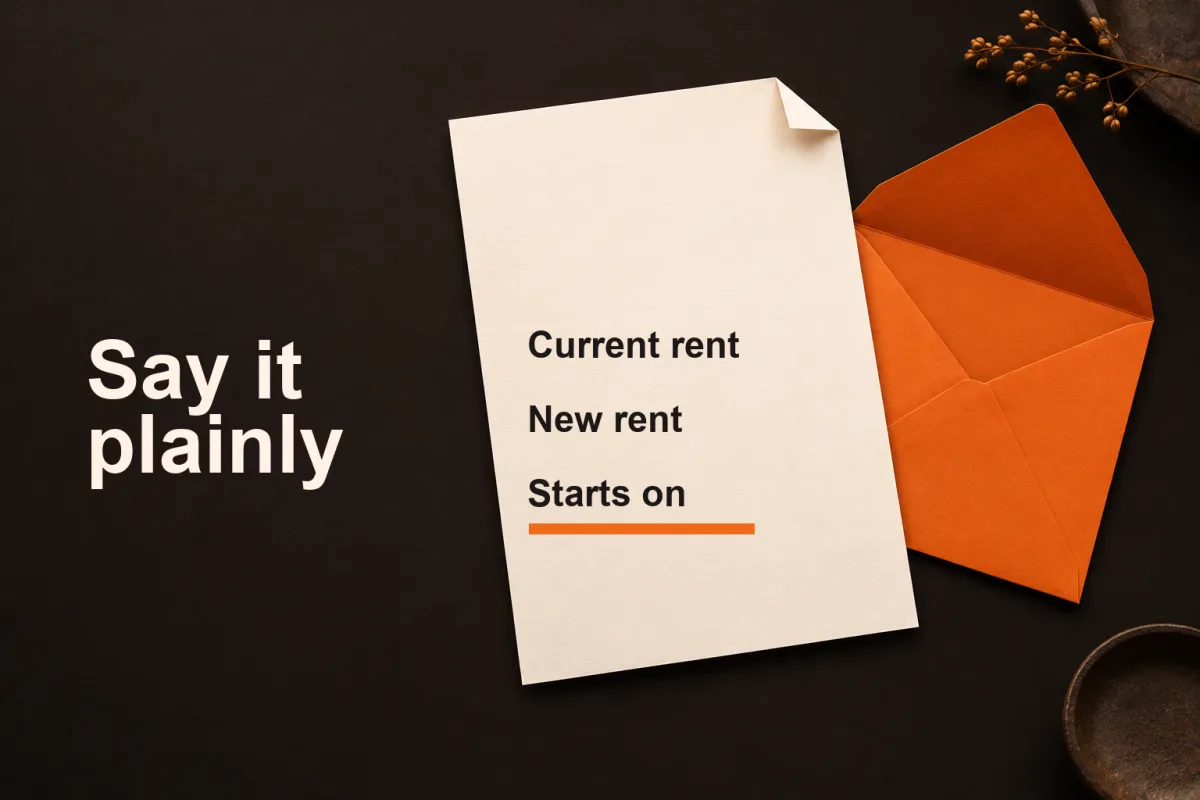
Why the letter matters as much as the number
A rent increase is the moment a resident decides whether to stay. For most households, moving is expensive and tiring, so a reasonable increase explained clearly is usually accepted. What tips people into looking elsewhere is often not the amount but how it arrived: a short-notice letter, a number with no context, a tone that reads like a bill, or nobody answering the phone when they call with a question.
For the property manager, that decision has a real cost either way. A resident who stays at the new rent saves the owner a vacancy, a turnover, cleaning, repairs and the time it takes to lease the unit again. A resident who leaves because the letter felt careless can cost the owner more than the increase brings in for the year. That is why the letter deserves the same care as the number, and why the owner should hear that trade-off before the number is set.
The letter also has a legal job. In most places it is formal notice, and a notice that is late, short, or delivered the wrong way may not count. Residents and their advisers check these things. So the work below starts with checks, not wording.
Check before you write
The letter is the last step. The work that decides whether it holds up comes before it.
| Check | Where to look |
|---|---|
| Does the lease allow an increase now, or only at renewal? | The lease term and any renewal clause |
| How much notice is required, and how must it be delivered? | Your lease, plus state and local law, checked with counsel |
| Is there a limit on the size or frequency of an increase? | State and local rules, checked with counsel |
| Is the unit on a program with its own rules? | Your property file and program paperwork |
| What is the new rent, and from which date? | Your owner approval and your rent roll |
| Has the owner approved it in writing? | Your management agreement and email trail |
If any row is a guess, stop and find out. A letter sent too late or too short usually has to be sent again, and the resident remembers the first one.
This is a working template, not legal advice. Notice periods, limits on increases and required wording depend on your lease and on state and local law. Check yours with your own counsel before using it.
What the letter must say
- The current rent and the new rent. Both, side by side, so nobody does the math.
- The date the new rent starts. Give the day, not "next month".
- The lease or renewal context. Say whether this is an offer to renew at the new rent or a change during the term.
- How to respond and by when. A date, a person and a way to reach them.
- What stays the same. Residents read an increase as a bundle of changes. Say what is not changing.
- Who signed it and how to reach them. A named person beats a mailbox.
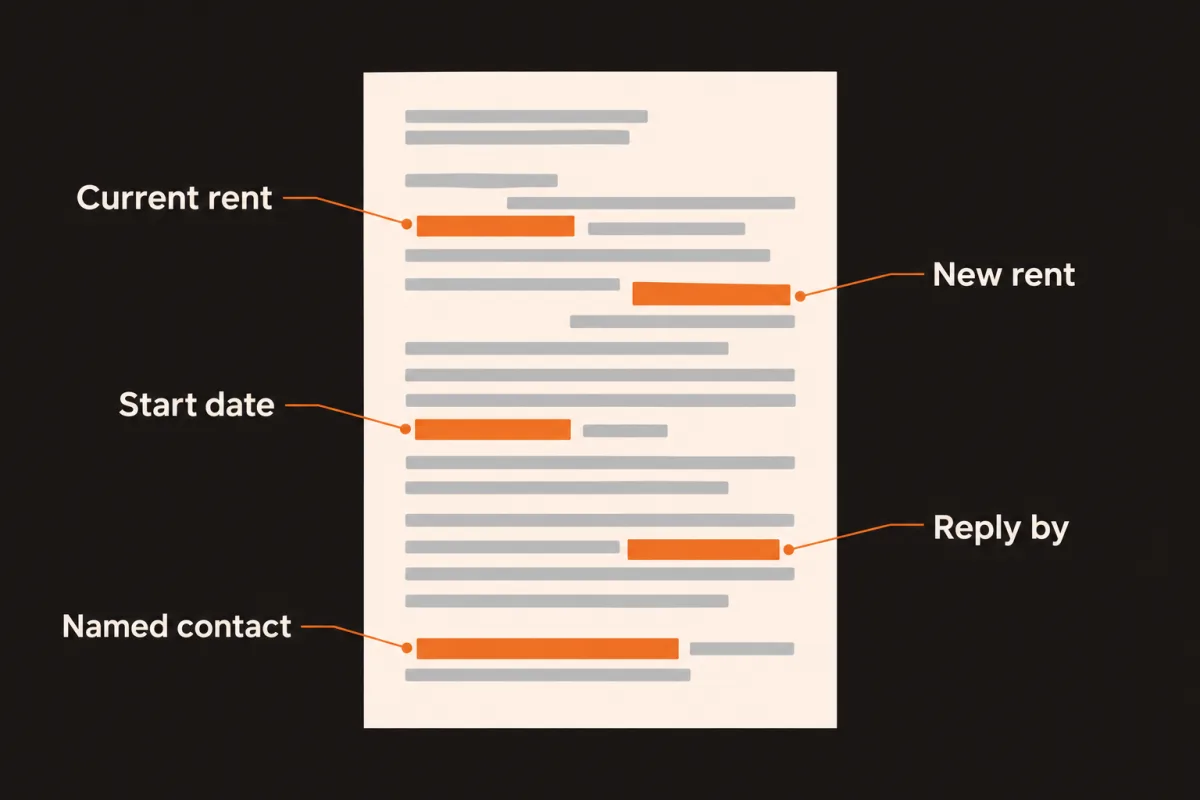
Notice the order. Residents scan for the new number and the date before they read anything else, so put both near the top in plain figures. The friendly lines about staying and the thanks for living there belong around those facts, not in front of them. A letter that opens with two paragraphs of warmth before the number reads as softening a blow, and residents notice.
Write the amounts exactly as they appear on the rent roll. Do not round, and do not express the change only as a percentage. A percentage makes the resident do arithmetic and invites the question of what it was a percentage of. Show the old figure and the new figure and let them see the difference.
Keep the reason short and true. "Costs at the property have gone up" is fine if it is so. Do not invent a justification, and do not point to a market figure you cannot show.
Sending an increase
Count the notice period from the day it is delivered under your lease, not the day you wrote it.
The template
An offer to renew at a new rent
Subject: Your lease at [property address], renewal offer
Dear [resident name],
Your lease for [unit] ends on [lease end date]. We would like you to stay, and we are offering a renewal for [term, for example twelve months] starting [start date].
Your current rent is [current rent]. Under the renewal, your rent would be [new rent], starting [effective date]. The other terms of your lease stay the same unless the attached renewal says otherwise.
To accept, please sign and return the attached renewal by [response date]. If you have questions, or would like to talk about the offer, contact [name] at [phone and email]. If we do not hear from you by [response date], we will call to check what your plans are.
Thank you for living at [property name].
[Name, title, company]
A change in rent for a long-term resident
Dear [resident name], thank you for [number] years at [property name]. We are writing to tell you that your rent will change from [current rent] to [new rent] on [effective date]. This letter is your formal notice. The change has been kept as modest as we can [only include this line if it is true]. Everything else about your lease stays the same. If you would like to talk about it before then, call [name] at [phone] and we will make time.
A letter to a resident of many years can be a few lines shorter and a little warmer, but it still carries the same facts. For the full renewal sequence, read the lease renewal letter template, and if you decide not to offer renewal at all, use the non-renewal letter template instead.
When the resident pushes back
Some will call. Have the facts ready: current rent, new rent, effective date, what the owner has approved. Listen first, and write down what they said. If you have room to move, for example on the start date or the term, say so only if the owner has agreed to it. If you do not, say that plainly and explain what the letter already offered.
It helps to decide before the letters go out what you can and cannot offer, and to agree it with the owner in writing. A later start date, a different lease term or a small concession on something other than rent are common options. Knowing the answer in advance means every resident who calls gets the same reply, and nobody gets a better deal just because they pushed harder.
Do not promise to "see what we can do" unless you will. A vague promise followed by the same number costs more goodwill than a clear answer on day one.
A walkthrough: one renewal from start to finish
Say a resident in a two-bedroom unit has a lease ending in a few months, and the owner wants to raise the rent at renewal. Here is how the increase runs when every step is in place.
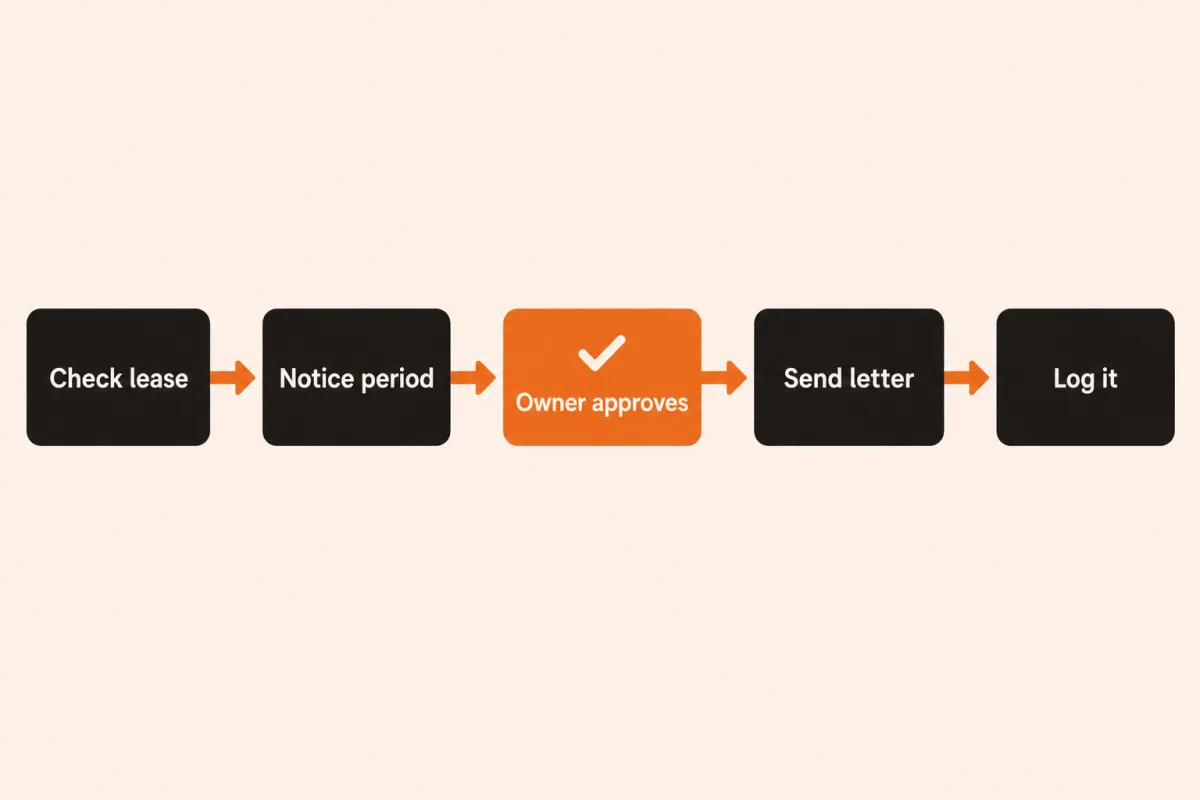
First, the property manager pulls the lease and confirms the rent is fixed for the term, so the increase can only take effect at renewal. They check the notice period and delivery method for that state and city with counsel's template, and work out the latest date the notice can be delivered. They put that date in the calendar with a buffer, because the notice needs to be delivered, not just written, by then.
Next comes the owner. The manager sends the owner the current rent, the proposed rent, the resident's payment history and maintenance record, and a short note on what a vacancy would involve for this unit: the turnover work, the time to re-lease, and the risk that a new resident pays less in the first months. The owner approves the new figure in writing. That email goes in the file.
The manager drafts the renewal offer from the template, with the current and new rent side by side, the start date, the term and a response date. They name themselves as the contact, with a direct phone number. The letter is delivered the way the lease and local rules require, and the date and method are logged.
A week later the resident calls. They have been there several years and the increase surprised them. The manager listens, notes what they said, and explains the offer again. The owner had agreed in advance that the start date could move by a month if a resident asked, so the manager offers that. The resident signs. The whole exchange is recorded in the resident file, including the call.
None of this is unusual. It simply has every step done in order, with the owner decision made before the letter, not after the resident objects.
Common mistakes
Counting the notice from the wrong day. The notice period usually runs from delivery as the lease and law define it, not from the date on the letter. Build in a buffer for mail and weekends.
Raising rent mid-term when the lease does not allow it. Many leases fix the rent for the term. Read the lease before drafting anything.
Sending before the owner approves in writing. If the owner changes their mind after the letter goes, you are the one who has to retract it.
Inventing a reason. Pointing to "market rates" or rising costs you cannot show invites a challenge you cannot answer. Give a short true reason or none.
Treating similar residents differently without a reason. Apply increases by a consistent rule you can explain, such as by unit type or lease date, and write the rule down. Inconsistent increases can raise fair housing questions, so check your approach with counsel.
No named contact. A letter signed by "Management" sends every question to the general inbox and makes the increase feel impersonal.
How to adapt it
For single-family homes with individual owners, the owner conversation is the bigger part of the work. Owners often want a larger increase than the resident will accept, and the manager's job is to lay out the cost of a vacancy plainly enough that the owner can choose with the full picture. A short written summary works better than a phone call, because the owner can reread it.
For multifamily properties, increases usually run in batches by lease end date. The risk shifts from one difficult conversation to many small errors: the wrong rent on the wrong unit, or a notice date missed for one lease in a batch. Work from the rent roll export, check every row, and have a second person spot-check before anything is sent.
If the unit is on a subsidy or affordable housing program, the program usually has its own process for rent changes, and the template above may not apply as written. Follow the program paperwork and check with counsel.
If you use AppFolio, Buildium, DoorLoop or Rent Manager, the renewal workflow inside the software can generate letters, but it will not check your state notice rule for you or tell you the owner has not approved. Those checks stay with a person.
Draft it with AI
Put your lease data, your notice period and the template above in a ChatGPT or Claude Project, then send:
Using only the attached rent roll and the notice period in this Project, list every lease ending in the next [number] days with current rent, proposed new rent, lease end date and the latest date the notice can be delivered. Flag any unit where the proposed rent or notice date is missing or does not fit our notice period. Then draft the renewal letter from the template for the first three units. Do not round any number and do not add a reason I did not give you.Read each letter against the lease before it goes. The model drafts. A person confirms the dates, the amounts and the delivery method.
Before you send
- Current rent, new rent and effective date match the rent roll and the owner approval.
- The notice period is met from the day of delivery.
- The delivery method is the one your lease and local law allow.
- Your counsel has seen the template for this state.
- A copy and the date sent are in the resident file.
Questions
How much notice do I have to give for a rent increase?
It depends on your lease and on state and local law. Check the required period and delivery method with your own counsel before you send.
What should a rent increase letter include?
The current rent, the new rent, the date it starts, whether it is a renewal offer or a mid-term change, how to respond and who to contact.
Can I raise the rent in the middle of a lease?
Often the lease controls this. Many leases fix the rent for the term, so check the lease and local rules before you send any notice.
Can AI write a rent increase letter?
AI can draft it from your template and check dates against your notice period. A person confirms the amounts, the dates and the delivery method before it goes.