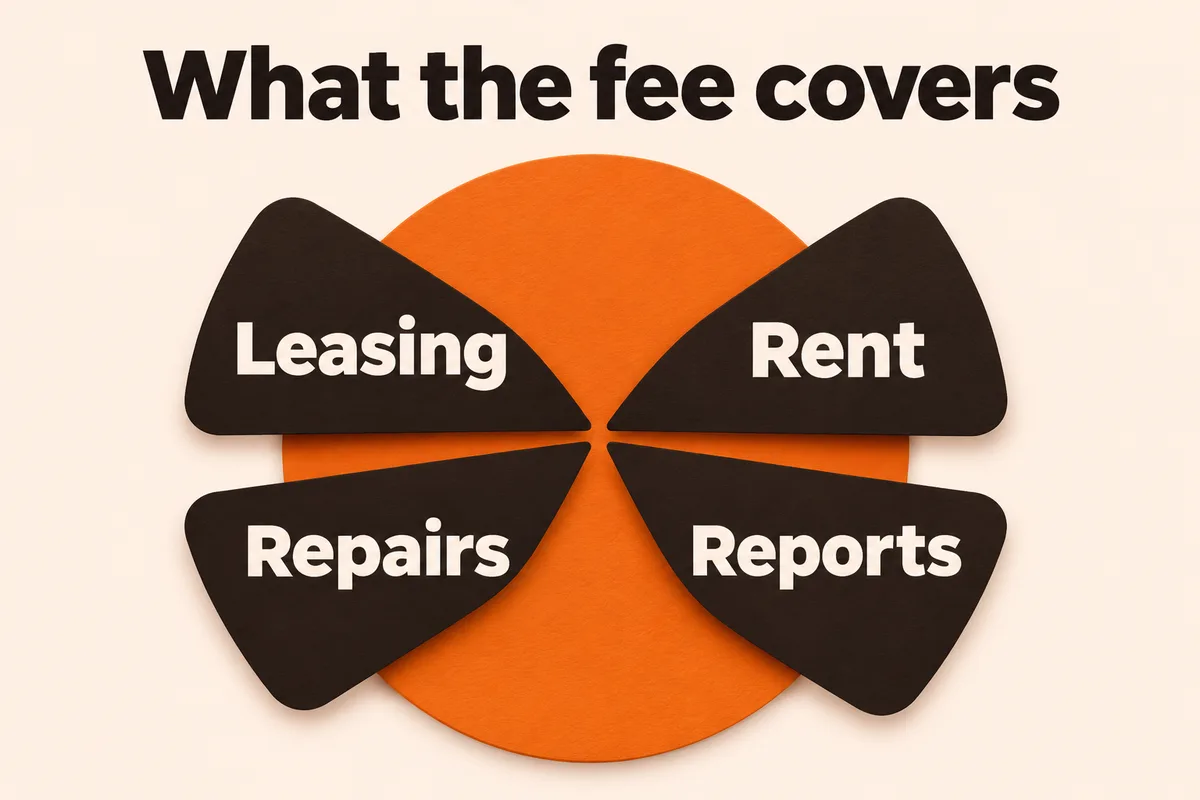
Why owners push back on fees
An owner who questions the fee is usually asking a different question: what am I getting for it? When the answer is clear, the number stops mattering much. When the answer is vague, every line on the statement looks like a charge for nothing. The fee conversation is really a conversation about visibility, because owners cannot see most of what a manager does. It is one of several guides on keeping owners informed, and the free Owner Statement Agent drafts the monthly explanation from your closed month.
Think about what the owner sees. They see a monthly statement with a deduction, and they see a charge when a resident moves in or renews. They do not see the phone calls, the vendor chasing, the screening, the notices, the bookkeeping or the nights when something went wrong and was fixed before it became a problem. Good work is quiet, and quiet work is hard to value. So the job of the explanation is to make the work visible without turning every message into a list of tasks. Owners can also take it to their accountant: IRS Publication 527 lists management fees among the common expenses of renting out a property.
The second cause is surprise. If a fee appears that the owner did not expect, they feel misled, even if it was in the agreement. Most fee disputes are not about the amount. They are about the moment the owner learned the fee existed. So the best explanation happens early, in writing, and again whenever something new is about to be charged. The owner onboarding checklist puts the fee conversation at the start, where it belongs. Owners weighing that fee often want to know what else to check, and vetting a property manager covers it, while the rental cash flow worksheet shows where the fee lands in the numbers.
This is a working guide, not legal advice. Management fees, permitted charges, disclosure requirements and agreement terms depend on your management agreement and on state and local law. Check yours with your own counsel before you send fee wording to owners. Do not quote any fee that is not in your signed agreement.
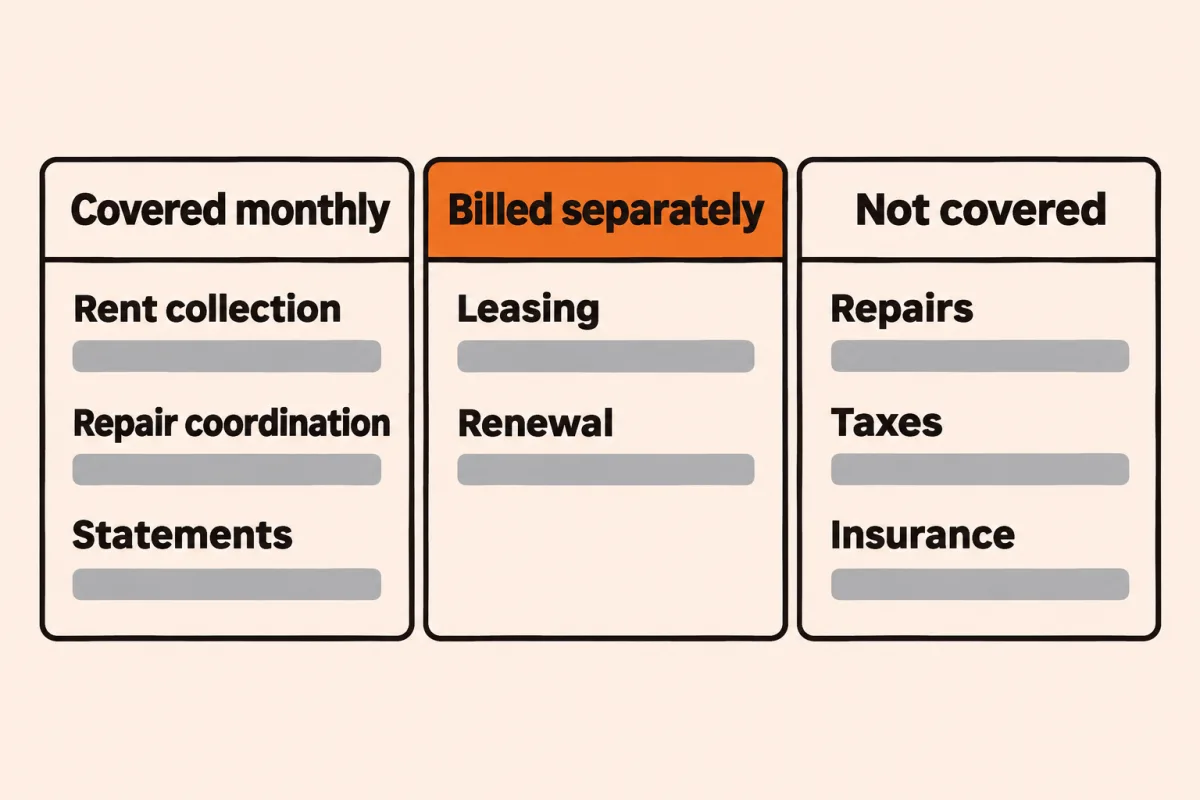
Say what the monthly fee covers
Start from your own agreement, not from memory. Open it and list what the monthly fee includes, in the agreement's own words. Then translate each item into what the owner would notice if it stopped. Collecting rent means the money arrives on time and late rent is chased. Coordinating repairs means a resident calls one number and the owner hears about it once. Keeping records means there is a file if a question comes up in two years.
Keep the language concrete. Owners respond to what happens, not to service categories. Instead of saying the fee includes property administration, say that your team answers resident calls, books vendors, follows up on late jobs, keeps the lease and notices in order and sends a statement on a set date. Each of those is a thing the owner could otherwise be doing at ten at night.
Name the person and the process where you can. A fee is easier to accept when the owner knows who does the work and how often they hear about it. Our guide on owner update emails shows the kind of message that makes that visible without adding hours to your week.
Say what is billed separately, and why
Most agreements have a short list of charges outside the monthly fee. They commonly relate to finding a resident, renewing a lease, setting up a property, handling a large project or ending the agreement. The names and the amounts are whatever your agreement says, and you should not describe any of them from another firm's practice.
For each separate charge, explain three things. What event triggers it. What work it pays for. When the owner will see it. A leasing fee, for example, pays for the work of marketing the property, showing it, screening applicants and writing the lease, and it is triggered by a new resident moving in. An owner who knows that in advance does not feel ambushed when it appears. An owner who learns it from a statement does.
Be honest about trade-offs. If a charge exists because it keeps the monthly fee lower, say so. If an owner asks why a fee exists and the answer is that it is in the agreement, say that, then explain what it covers. Do not invent a justification that you would not be able to defend if the owner asked a follow-up.
Say what the fee does not cover
This is the part most managers skip, and it prevents the most trouble. The fee does not pay for repairs, which are the owner's cost. It does not pay for taxes, insurance, association dues or capital items such as a roof. It does not guarantee full occupancy, rent on time or a particular result. It does not turn every owner request into free work.
Say it plainly and early. An owner who knows the fee covers management and not maintenance is less likely to be upset when a repair invoice arrives. An owner who understands that you coordinate the work and the vendor charges for it will read the statement correctly. Our guide to telling an owner about an expensive repair picks up from there.
If you offer extra services, such as project management for a renovation or a special report, say what they cost and how to ask for them. Owners usually like having a clear menu, and it saves you from doing unpaid work out of politeness.
Explaining the fee in four steps
Use the owner's agreement as the source for every line.
Wording you can adapt
Use this as a starting point for a call or a short email, and replace every bracket with the exact language from the signed agreement. Do not add any figure that is not in it.
What your management fee covers
Hello [owner name],
You asked about the fee on your [month] statement. Here is how it works under your agreement dated [date].
The monthly fee covers [list from agreement: rent collection, resident communication, repair coordination, record keeping, monthly statement]. In practice, that means [one or two concrete examples from this owner's property].
Some items are billed separately under section [number]: [item, trigger, when it appears on the statement]. That is why you saw [line] on [month].
The fee does not cover repairs, taxes, insurance or capital items such as [examples]. Those are paid from your funds and appear on your statement with the vendor invoice attached.
If any line is unclear, tell me which one and I will walk you through it. Thank you,
[name, phone]
For a call, keep the same order: what it covers, what is billed on top, what it does not cover, where to see each one. Offer to send the email afterward so there is a record.
A walkthrough: a hard conversation
Say an owner calls after reading a statement. A leasing charge appeared the month a new resident moved in, and the owner says nobody told them about it. The manager is tempted to reply that it is in the agreement, which is true and which tends to end the owner's trust.
Instead, the manager opens the agreement before the call and finds the section. They begin by acknowledging the surprise: the charge should not have been a surprise, and they should have reminded the owner when the vacancy started. They explain what the charge pays for, in the order the work happened. Marketing, showings, screening and the lease. They show where it appears on the statement and which month.
The owner asks whether it is negotiable. The manager does not improvise. They say the amount is set by the agreement, and that any change would be a written amendment they would need to discuss with the firm's owner. They do not promise a discount on the call, and they do not hint at one. The owner asks what else might appear that they have not expected. The manager lists the other separate charges in the agreement and when each would apply.
After the call, the manager sends the written version and adds a note to the file. They also change one process step: from now on, when a vacancy starts, the owner gets a short message that names the charge that will follow. The dispute was never about the fee. It was about timing, and the fix is a reminder. If the owner stays unhappy, the manager can point to the written record and, if it matters, to the guide on negative owner balances when money questions get tangled with the fee.
Common mistakes
Answering with the agreement alone. It is true and it is cold. Quote the clause, then explain what the work is.
Describing another firm's fees. Say only what is in your signed agreement. Comparisons with other firms invite an argument you cannot win with facts.
Promising a discount on the spot. A verbal promise becomes a dispute later. Changes go through a written amendment approved by whoever has the authority.
Waiting for the owner to find the charge. Tell them before it appears. A short heads-up message costs a minute and prevents the call.
Mixing the fee with repair costs. Owners often blame the manager for a repair bill. Keep the two apart in the statement and in the explanation.
How to adapt it
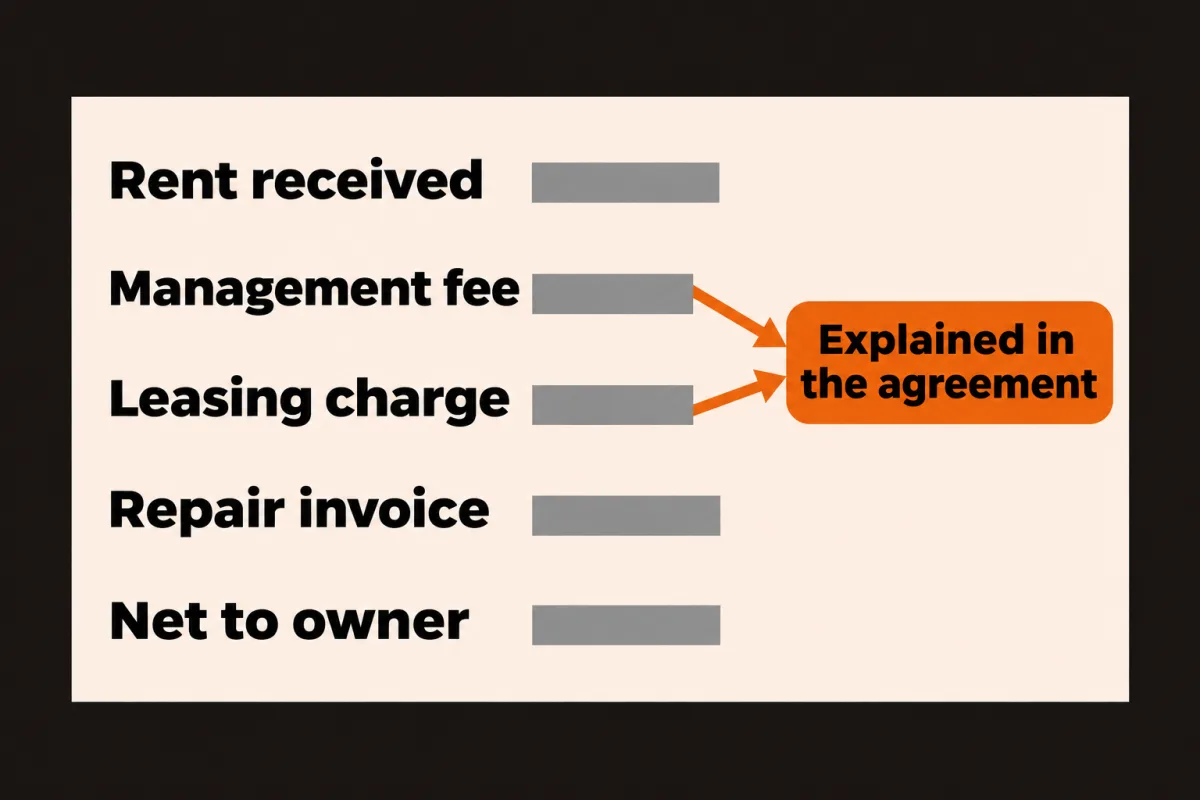
For a new owner, give the explanation as part of onboarding, with the agreement open on both screens. For a long-standing owner who is questioning a line, start with the facts and a written summary. For an investor with many doors, offer a one-page table of the fee schedule and where each charge appears, because they read statements in bulk and want to find patterns quickly.
If you have an in-house maintenance team or a markup on vendor work, that must be disclosed in the agreement and explained in the same plain way. Do not leave it for the owner to discover on an invoice. If you manage for owners in more than one state, keep the fee explanation tied to the agreement for that property, since terms and disclosure rules may differ.
Whatever software you use, whether AppFolio, Buildium, DoorLoop or Rent Manager, the fee should appear on its own line with a clear label on the statement. If the label is cryptic, change it, or add a note in the statement so the owner does not have to ask. The owner statement guide shows a layout that keeps fees readable.
Where AI helps and where a person decides
AI is useful for turning a dense agreement into plain words. Paste the fee section of an agreement into ChatGPT or Claude, with the owner's name and address removed, and ask it to list what the monthly fee covers, each separate charge with its trigger, and what is not covered. It can draft the email above in the tone you choose and produce a one-page owner handout. It can also check your draft for any promise the agreement does not support.
A person decides what the agreement means and what you will say. A model can misread a clause or fill a gap with something that sounds right. It must not set, change or promise a fee, quote a legal rule or tell an owner what is fair. Read every sentence against the agreement before it leaves your office, and have your counsel review a template once.
Below is the fee section of a property management agreement with identifying details removed. Using only this text: (1) list what the monthly fee covers, in plain language an owner would understand; (2) list each separate charge with its trigger and when it would appear on a statement; (3) list what the text says the owner pays directly; (4) list anything unclear or silent. Then draft a short email to an owner who asked what the fee covers. Do not state any amount that is not in the text, do not compare with other firms and do not offer discounts. If a detail is missing, write NOT IN AGREEMENT. [paste fee section]Check each line against the agreement. If you want a place to start with owner messages, the agents draft them for a person to review.
Before you send a fee explanation
- Every item comes from the signed agreement, with the section number.
- You said what the fee covers, what is billed separately and what is not covered.
- Each separate charge has a trigger and a place on the statement.
- No amount or promise appears that is not in the agreement.
- You did not compare with other firms or promise a discount.
- The message is in writing and filed with the owner record.
Watch: How to Explain a Management Fee to an Owner: Covered, Billed, Not Covered
A Sokage AI video for property managers: How to Explain a Management Fee to an Owner: Covered, Billed, Not Covered. The guide below has the full template and steps. Watch on YouTube.
Questions
How do you explain a property management fee to an owner?
Open the signed agreement and explain, in order, what the monthly fee covers, what is billed separately and when, what is not covered, and where each item appears on the statement.
What does a property management fee usually cover?
It depends on the agreement. Commonly it covers rent collection, resident communication, repair coordination, records and statements, but check the signed agreement for the exact list.
How should I handle an owner who disputes a fee?
Acknowledge the surprise, quote the clause, explain the work behind it, show where it appears on the statement and put the answer in writing. Do not promise a discount on a call.
Can AI explain a management fee schedule?
Yes, from the fee section of the agreement it can list what is covered and billed separately and draft the email. A person checks every line against the agreement and sets any fee.