
Why owner onboarding goes wrong
A new owner arrives with a mix of hope and worry. They handed you a building or a house, usually their largest asset, and they want to hear that it is in good hands. You arrive with a stack of forms and a long to-do list. Both sides are busy, so the intake gets done fast, and the questions that feel awkward get skipped. How much can you spend without calling? Who should hear about a late payment? What does the owner expect to see on the first statement?
Those skipped questions come back later as surprises. A repair bill arrives and the owner says they never agreed to anything over a certain amount, while you thought that limit was understood. A statement shows a charge the owner did not expect and they feel misled. A tenant complains and you call the owner at work, when the owner assumed you would handle it quietly and send a summary on Friday. None of this means anyone acted in bad faith. Nobody wrote the expectations down.
Onboarding is where you do that writing. The goal is not paperwork for its own sake. The goal is that in month three, when something goes sideways, you and the owner are both looking at the same page. This is also the cheapest time to learn what kind of owner you have: the one who wants a call for everything, the one who wants silence unless there is a problem, and the one who wants to approve every dollar. You will serve each of them differently, and they will each tell you how if you ask.
This guide assumes the management agreement is already signed. Its terms control, and the checklist below is about everything the agreement does not cover: the habits, contacts, thresholds and expectations that make the relationship work day to day.
This is a working checklist, not legal advice. Management agreements, trust account handling, owner funds, licensing and tax forms depend on your state and your agreement. Check yours with your own counsel before using it.
What to collect before the first rent cycle
Start with the facts you cannot operate without. You need to be able to pay vendors, send statements, reach the owner in an emergency and answer a resident who asks who owns the building. Collect them in one sitting if you can, because chasing documents across three weeks drags the start date and makes the owner feel the process is disorganized.
Then collect what you need to do the job well, which is different. The owner knows things about the property that are not in any file: the water heater that trips in cold weather, the neighbor who complains, the previous manager who handled things a certain way. A short conversation brings these out, and each one saves a call later. Keep the list below in your intake notes and mark each row done, waiting or not applicable.
| Item | Why you need it | Who provides it |
|---|---|---|
| Signed management agreement | It sets fees, authority and termination. Everything else points back to it | Owner and you |
| Owner legal name and contact details | Statements, tax forms and emergencies all use them | Owner |
| Tax form and payment details for owner payouts | You cannot send the first payout without them | Owner, through your secure method |
| Insurance certificate and the carrier contact | A loss at 11 PM needs a policy number | Owner |
| Leases, deposits held and move-in dates | Your ledger has to start from the right balance | Owner or previous manager |
| Existing vendors and warranties | Some owners have a plumber they trust, and warranties may limit who can repair what | Owner |
| Known problems and deferred repairs | You do not want to be blamed for a roof you were never told about | Owner and your inspection |
| Utility accounts, HOA or association contacts, keys and codes | Needed on day one for transfers and access | Owner and previous manager |
Do an inspection or at least a walk-through before you take over, and write down what you see with dates and photos. If a problem exists on day one, you want it in the file as a pre-existing condition. If the owner already knew about it, that conversation is much easier now than after a resident reports it.
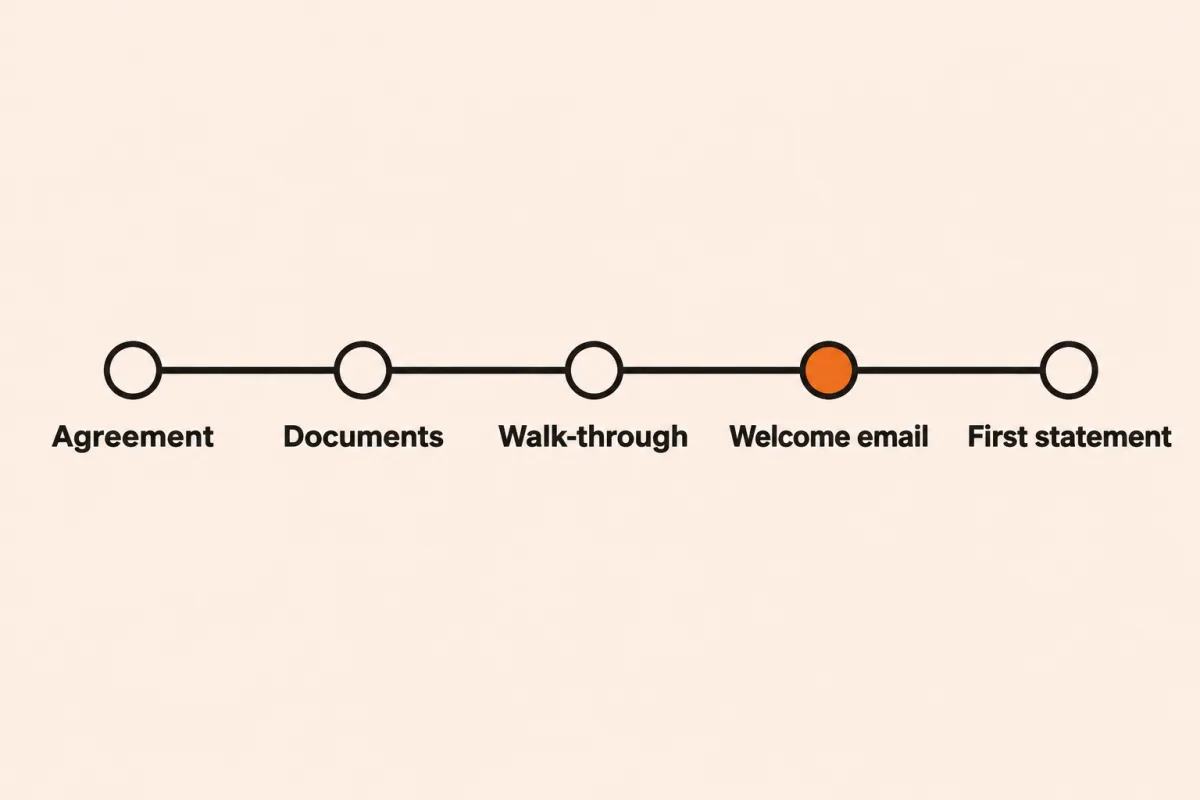
Owner onboarding, from signed agreement to first statement
The expectations step is the one most firms skip. It is also the one that prevents the angry call.
The agreements that are not in the contract
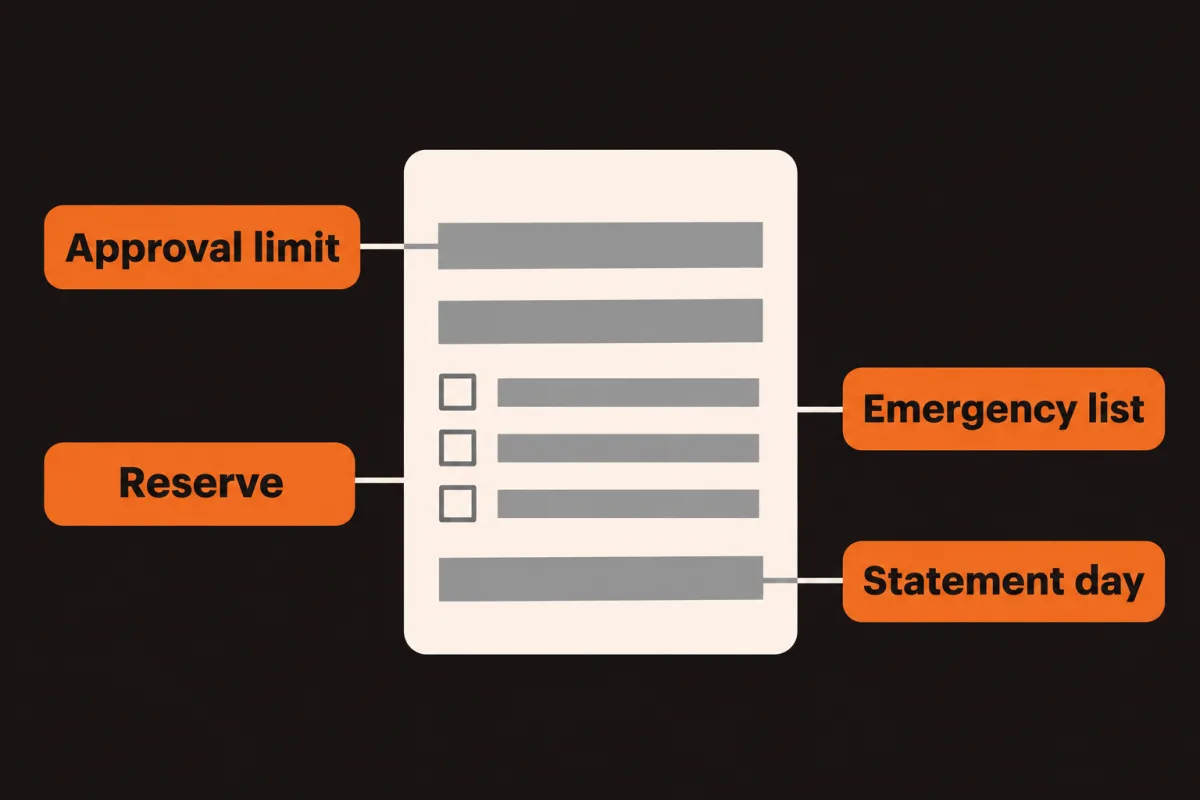
Five decisions rarely appear in a management agreement, and each one produces most of the owner conflict in the first year. Ask for them out loud, write down the answer, and send it back to the owner in the welcome email so they can correct you.
The approval limit. Your agreement may name an amount above which you need the owner to approve a repair. Confirm it, and ask what counts as one repair. A plumber who finds a second problem during the visit can push a job over the limit halfway through, and the owner will want to know what you do then. Our guide to telling an owner about an expensive repair covers the message itself.
What counts as an emergency. Decide together what you will fix without a call. Most owners agree that active water, no heat in cold weather and a security failure justify action first and a message second. Write the list down and attach it to the file, so that the 2 AM decision is not yours alone.
The reserve. If the agreement lets you hold a reserve from rent, confirm the amount and what happens when a repair exceeds it. Owners who learn about the reserve from a statement feel their money was taken. Owners who agreed to it feel it was protection. The difference is one conversation.
How and when you will communicate. Ask which channel the owner reads, which they answer and how fast. Some owners read email carefully and ignore text. Some are the reverse. Agree on a statement day each month, and agree on what triggers an immediate message: a vacancy, an eviction filing, a repair above the limit, a large insurance claim, a negative balance. The negative owner balance guide shows why this one matters.
Who else can speak for the owner. A spouse, a bookkeeper, an accountant, an adult child. If someone else may approve work or receive statements, get that in writing from the owner, and note any person who may not receive information. Without that, you will eventually share a statement with someone the owner did not want to have it.
The welcome email
Send a welcome email within a day or two of signing. It confirms what you agreed, shows the owner what happens next and gives them one person to contact. Keep it short enough to read on a phone, and do not copy the contract into it. The point is to reduce anxiety by showing there is a plan.
Notice what the template leaves out. It makes no promises about results, no claims about how many days a vacancy will last and no statistics. A new owner trusts a clear schedule more than a confident forecast, and you cannot be held to a schedule you described honestly.
Welcome to [company]: what happens next at [property]
Hello [owner name],
Thank you for choosing us to manage [property]. Here is what you can expect, and what we have noted from our conversation.
Your contact. [Name, role, phone, email] is your point of contact. For emergencies outside office hours, call [number].
Your statement. You will receive it on or around [day] each month, with a short note explaining anything unusual.
Approvals. We will ask you before spending more than [amount from agreement] on one repair, except for the emergencies we agreed on: [list]. If we do act first, we will tell you the same day.
When we will contact you right away. [Vacancy, large repair, insurance claim, legal notice, negative balance].
What we still need from you. [Item], [item], [item], by [date].
If any of this is not how you remember our conversation, reply and tell me, and we will fix it.
[Name, company, phone]
A walkthrough: one owner, the first month
Say an owner with two rental houses signs with your firm on the first of the month. The coordinator sends the document list that afternoon and gets most of it back within a few days. The insurance certificate and the previous manager's deposit records take longer, and the coordinator marks both as waiting and sets a follow-up.
On the walk-through, the coordinator notes a cracked sidewalk slab at one house and a water stain on a closet ceiling at the other. The owner says the stain was already there when they bought the house and a roofer looked at it last year. The coordinator writes down the roofer's name, asks for the report, and records the stain with a photo and the date.
On the phone, the owner says they want to be called for anything above a modest amount and for anything involving a lawyer, and would rather get everything else in the monthly note. The approval limit in the agreement is higher than what the owner just described. The coordinator writes down the owner's preference, asks if they want to change the agreement or keep the limit and handle the difference through a note in the file. The owner chooses to amend it, and counsel handles the paperwork.
The welcome email goes out with those details in it. The owner replies with one correction: their accountant should get the statements too. The coordinator asks for that in writing and adds it. At the end of the month, the first statement goes out with a short note explaining the one-time setup items. The owner has no questions, which is the aim. If you want a model for that statement note, see our owner statement guide.
Common mistakes
Treating onboarding as an administrative task. When the intake is a form to complete, you collect documents and skip the conversation. The conversation is where you learn how this owner wants to be treated. Block time for it, and do it by phone or in person when you can.
Assuming the approval limit is understood. The number in the contract is only the start. Ask what happens when a job grows during the visit, and agree on it. Otherwise your first mid-job surprise becomes a trust problem.
Promising a result you do not control. A line like "we will rent it quickly" sets an expectation your market may not meet. Promise your process instead: how often you will report and how fast you will respond.
Skipping the pre-existing conditions. If you do not document the stain, the cracked slab or the old water heater at the start, anything that fails later looks like your fault. A dated photo costs a minute.
Never sending the agreement back in plain words. Owners do not remember a conversation as precisely as you do. The welcome email is a record, and it gives them a chance to correct the record while the fix is cheap.
How to adapt it
For a single investor with one or two houses, the intake can be a conversation and a one-page file. The owner probably checks their email daily and wants to know the person who answers the phone. For an owner with a larger portfolio, ask whether they have a standard for approvals, reserve and reporting across all properties, and try to apply one policy so your team does not carry ten different rules. For an owner who lives abroad or travels, confirm who can sign in an emergency and how you will reach them across time zones.
An owner of a single-family rental and an owner of a multifamily building care about different things. The first wants to know about the household, the second wants to see vacancy and trends. Match the welcome note and the statement note to that. If the owner uses their own bookkeeper, ask the bookkeeper what format they need, because it affects how you export the statement.
Where you keep the file depends on your software. AppFolio, Buildium, DoorLoop and Rent Manager each have owner records and notes fields, and you can store the approvals, contacts and statement preferences there, so the next coordinator sees them. If your system has no place for a field, put it in a short intake page and link it from the owner record. The test is simple: could a new team member read the file and handle the owner correctly, without asking you?
When the file is in place, the vendor side comes next. Our vendor onboarding checklist covers the same job for the people you will send to the owner's property, and the owner update email template gives you the monthly rhythm.
Where AI helps and where a person decides
AI is good at turning your notes into a structured file. After the call, paste your messy notes into ChatGPT or Claude and ask it to produce the owner record, the welcome email and a list of what is still missing. It can also draft the follow-up for each missing document, and it can check the welcome email against your notes to make sure the approval limit and the statement day match.
A person decides everything that carries authority or money. The approval limit, the reserve, who may receive statements and what counts as an emergency come from the owner and from your agreement. The tool should never fill a gap with a typical value. If the notes do not say, the draft should say MISSING. Be careful about what you paste in: use the owner's name and property facts only in a tool your firm has approved, and leave bank details and tax numbers out of any chat.
Using only the intake notes and management agreement summary below, write (1) a one-page owner record with these headings: contact, approval limit, emergency list, reserve, statement day and channel, who else may receive statements, known property problems; (2) a welcome email in plain language with those same facts; (3) a list of documents still missing with a one-line follow-up message for each. Do not invent any amount, date or term. If a fact is not in the notes, write MISSING and name it. Keep the email under 250 words and do not make any promise about results. [paste notes]Read the output against your notes, fix what is wrong and send it from your own account. For the monthly statement note that follows, the Owner Statement Agent drafts it from your ledger and work orders.
Before you send the welcome email
- The agreement is signed and the approval limit matches it.
- The emergency list, reserve and statement day are written down and agreed.
- You have one contact name, one emergency number and the owner's preferred channel.
- Any other person who may receive statements is named, in writing from the owner.
- Known problems are in the file with photos and dates.
- Missing documents are listed with a date to follow up.
Questions
What should be in an owner onboarding checklist?
The signed agreement, contact and payout details, insurance, leases and deposits, vendors and warranties, known problems, utilities and access, and the five agreements the contract skips: approval limit, emergency list, reserve, communication channel and statement day.
When should you send the owner welcome email?
Within a day or two of signing, before the first rent cycle. It confirms what you agreed and gives the owner a chance to correct you while the fix is cheap.
What should an owner approval limit cover?
The amount in your agreement, what counts as one repair, and what you do when a job grows during the visit. Get the answer in writing, and check any change with your own counsel.
Can AI help with owner onboarding?
It can turn your intake notes into an owner record, a welcome email and a list of missing documents. A person confirms every amount, limit and term against the agreement, and keeps bank and tax details out of the chat.