Why cash flow is where new landlords get surprised
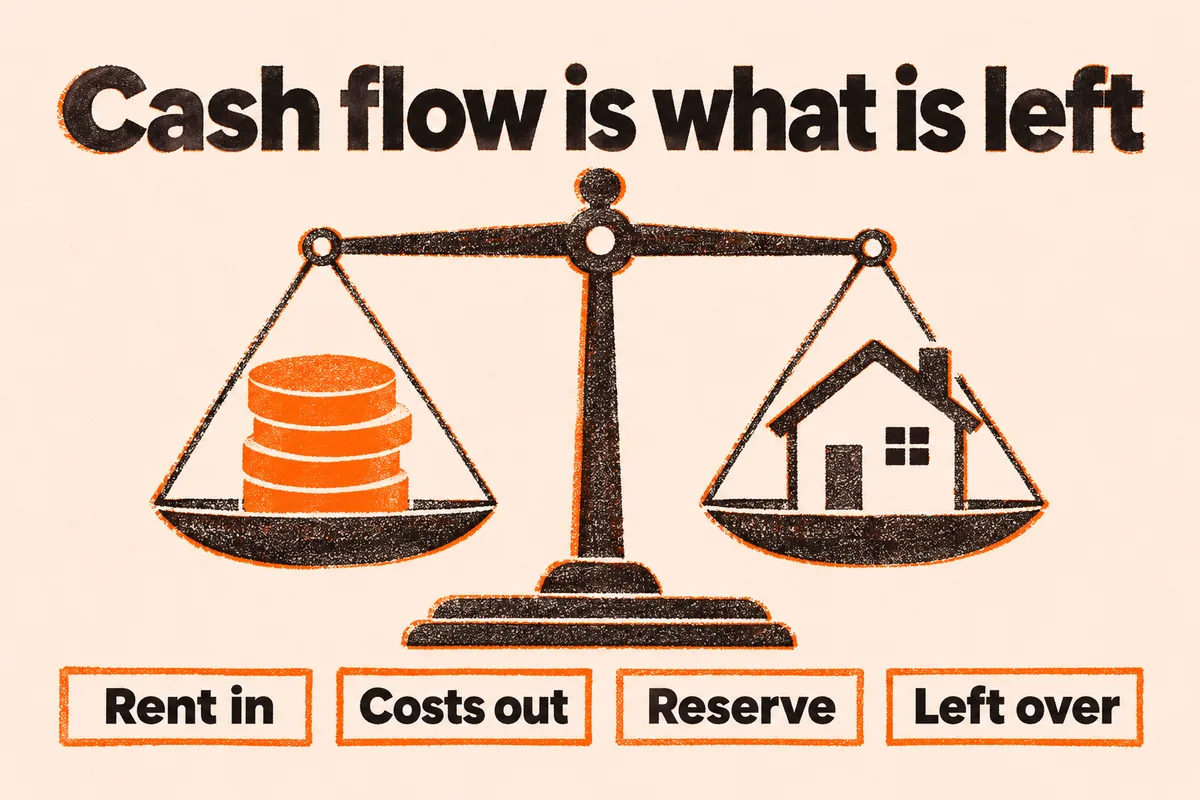
Cash flow is the money that is left after a rental has paid for itself. Rent comes in. Costs go out. What remains, month after month, is what you actually earn from the property before tax. It sounds simple, and the arithmetic is simple. The trouble is that the list of costs is longer than most first-time buyers think, and the lines they leave out are usually the ones that arrive as a single large bill.
A buyer looking at a listing sees a rent figure, a mortgage payment and perhaps a tax bill. Those three are easy to find. The rest hides in a different place: the roof that will need replacing, the months the unit sits empty between residents, the turnover cleaning, the vendor who charges a trip fee, the insurance that went up at renewal. None of these is rare. Together they decide whether a property pays you or costs you.
This guide is for people who own or are thinking about owning a rental, and for property managers who get asked to sanity-check an owner's plan. It is a worksheet, not a forecast. It gives you the lines, in an order that makes gaps obvious, and tells you where each number should come from. If you manage for owners, the owner statement guide shows how the monthly version of these lines reaches the owner.
This is general information, not financial, tax or investment advice. Tax treatment of rental income and expenses, depreciation, loan terms and local rental rules depend on your situation and where the property is. Review your numbers with your own accountant or advisor before you buy, borrow or file.
The income side: what you can count on
Start with the rent the unit can realistically earn, not the rent you hope for. The best source is what similar units nearby are actually leased for, in the condition yours is in, and the figure a local property manager would put on it. Listing prices are asking prices. They show what owners want, and they overstate what residents pay.
Then take away the months you will not collect. Every unit has some time between residents, and some residents pay late or not at all. You cannot know your own number in advance, so pick a placeholder you can defend and test the sheet with a worse one. If the property only works when it is full every month, the sheet is telling you something.
Add other income only if it is real and written down: a pet fee your lease allows, a parking space that is rented separately, laundry. Leave out anything you are not sure the law or the lease permits. Fee rules vary by state and by lease, so check with your counsel before you count on one. Put the rent line in the sheet as a range with a low case, a middle case and a high case, and treat the low case as the one that has to survive.
The cost side: the lines people remember
Some costs are on every buyer's list, and you should still check each one against a document, not a guess. The loan payment comes from a lender's written estimate, and it may include more than principal and interest. Property tax comes from the local assessor's record, and it can change after a sale, so ask what the new figure will be and not what the seller paid. Insurance comes from a quote for the type of policy a landlord needs, which is not the same as a homeowner policy.
If the property is in an association, the dues are a fixed monthly line, and special assessments are a risk to ask the association about in writing. Utilities the owner pays, such as water, sewer, trash or common-area electricity, depend on how the lease splits them. Look at the last year of bills, and ask whether the current resident pays any of them directly.
Management is a line even if you plan to manage the property yourself. Your time has a price, and the sheet should show what the property earns once someone is paid for running it. A manager charges a fee that is set in the management agreement, so use a written quote from a manager in your area. Our guide on owner onboarding shows what a manager asks for at the start, which is a good preview of what you will need to keep track of.
The lines first-time buyers leave out
These are the lines that turn a profitable sheet into an unprofitable year. None of them is exotic, and each one has a source you can check before you buy.
Vacancy and turnover. Each time a resident leaves, you lose rent for the days the unit is empty, and you pay for cleaning, painting, small repairs and listing. Some of that is a deposit matter and some is not, so keep the two apart. The move-out checklist shows what a turnover usually involves.
Routine maintenance. Faucets, locks, filters, smoke alarm batteries, pest service, a landscaper. Budget a line every month, not only when something breaks. Look at the age of the systems in the property and ask for the repair history.
A capital reserve. Roofs, water heaters, heating and cooling, flooring and appliances wear out on a schedule you can estimate from age. A reserve is money you set aside each month so the big bill does not land on you in one piece. This is the most commonly skipped line, and it is the one that makes cash flow look better on paper than in the bank.
Items a resident will not pay for. Normal wear is the owner's cost. Do not assume a deposit will cover repairs that are really age and use, and check your local rules on what a deposit may be used for.
Leasing and screening costs. Listing, photos, showings, screening reports and the time to run them. If a manager does it, the cost is a fee. If you do it, it is hours.
Legal and compliance. Licenses, registration or inspection requirements in some cities, and the occasional cost of a lawyer for a notice or a dispute. Ask your counsel what applies to your location.
Taxes and reporting. Rental income is reportable, and the treatment of costs, depreciation and losses is a matter for your accountant. The sheet is before tax, and it should say so at the top.
How a rental budget is built
Run the sheet three times: a low, a middle and a high case. The low case has to survive.
The worksheet
Copy the table below into a spreadsheet and fill each cell from a document: a lease, a quote, a bill, a record. Where you have only an estimate, write ESTIMATE in the source column and replace it before you commit money. A blank source cell is a number you have not checked.
| Line | Monthly amount | Source |
|---|---|---|
| Rent, low case | [fill in] | Comparable leased units, a manager's written opinion |
| Vacancy allowance | [fill in] | Your placeholder, tested against a worse one |
| Loan payment | [fill in] | Lender's written estimate |
| Property tax | [fill in] | Local assessor, including any change after sale |
| Insurance | [fill in] | Quote for a landlord policy |
| Association dues | [fill in] | Association statement, special assessments asked in writing |
| Utilities you pay | [fill in] | Last twelve months of bills and the lease split |
| Management | [fill in] | Written quote from a local manager |
| Routine maintenance | [fill in] | Repair history, age of systems |
| Turnover cost, spread by month | [fill in] | Vendor quotes for clean, paint, small repairs |
| Capital reserve | [fill in] | Age and expected life of roof, systems, floors |
| Licenses and compliance | [fill in] | Local rules, checked with counsel |
| Left over before tax | [calculate] | Rent minus every line above |
Read the bottom line last. If it is thin in the low case, do not argue with the sheet. Ask which line you can test with a better document, such as a second insurance quote, and which line is a guess you cannot afford.
A walkthrough: one example property
Say a first-time buyer is looking at a small house they plan to rent out. The listing shows a monthly rent that looks good beside the mortgage estimate. They fill the sheet using the steps above, and they use letters instead of invented figures, so this is a method and not a case study.
First, they replace the listing rent with what two similar houses nearby actually leased for, and they get a written opinion from a local manager. The figure is lower than the listing. That is rent, low case. Second, they add a vacancy allowance, and they set it by asking the manager how long units like this one sit between residents in that area.
Third, they replace the seller's property tax with the assessor's estimate for a new owner, and the number rises. They ask two insurers for landlord quotes and use the higher one for the low case. They find the roof is old and the water heater has a date sticker, so they set a reserve line from the expected life of each, and the monthly amount is larger than they expected.
Fourth, they add the manager's fee from the written quote and a routine maintenance line from the repair history the seller shared. The bottom line in the low case is now thin, and in the middle case it is positive. The buyer can decide with open eyes: negotiate the price, plan for a larger down payment, pass on the property or accept the thin low case on purpose. Any of those choices is better than learning the number from the first big repair bill. If you manage rentals for others, the same discipline helps with a negative owner balance, which is what a missing reserve looks like a year later.
Common mistakes
Using the listing rent. Asking rent is a hope. Use leased comparables and a manager's written view, and show the low case.
Skipping the reserve. Without it, a good month looks like profit and a bad year looks like a surprise. Set the amount from the age of the roof, the systems and the floors.
Counting the seller's tax and insurance. Both can change when ownership changes. Get new figures from the assessor and an insurer.
Treating your own time as free. If you will manage the property, put a management line in anyway. It tells you what the property earns when you stop being its employee.
Mixing deposit money with income. A security deposit belongs to the resident until the lease and local rules say otherwise. Keep it out of the cash flow line.
How to adapt it
For a single family home, the roof, the systems and the yard sit entirely with you, so the reserve line carries more weight. For a small multifamily building, you spread a roof across several units, but you also have shared systems and common-area bills, and vacancy depends on how many units are empty at once. For a condominium, the association handles the exterior, so your reserve is smaller and the dues and assessments carry the risk.
If you use a manager, send the sheet to the manager before you buy and ask which lines they would change. A manager sees real turnover, real repair costs and real rents every week, and that is a better check than a calculator. If you manage yourself, track the actual numbers monthly and compare them with the sheet, then update the placeholders. A year of real figures beats any estimate. The owner update email template shows how managers report the same lines when an owner asks how the property is doing.
Whatever software you use, whether AppFolio, Buildium, DoorLoop, Rent Manager or a spreadsheet, keep the line names the same from the first sheet to the monthly statement. When the names match, you can see at a glance which line moved.
Where AI helps and where a person decides
AI is useful as a second reader. Paste your filled worksheet into ChatGPT or Claude, with no personal details, and ask it to find lines that are missing, numbers with no source and cases that do not add up. It can also check your arithmetic and turn the sheet into a one-page summary for a partner or a lender conversation. It can list the questions you should ask a manager, an insurer or an association.
A person decides the numbers and the choice. A model does not know your local rents, your insurance market or your roof, and it will fill gaps with confident guesses if you let it. Do not ask it for a rent figure, a tax result or a verdict on whether the property is a good investment. Those belong to your documents, your accountant and you.
Below is a rental cash flow worksheet with a low, middle and high case. Do not change any number. (1) List every cost line a landlord usually has that is missing from this sheet. (2) List every line where the source column is blank or says ESTIMATE. (3) Check the arithmetic in each case and report any error. (4) Write five questions I should ask a local property manager, an insurer and the association before I commit. Do not give tax advice or say whether this is a good investment. If something is unclear, write UNCLEAR. [paste worksheet]Read its list against your documents, then take the sheet to your accountant. If you want a manager's view of how these lines reach an owner each month, see how to tell an owner about an expensive repair, and look at the agents that draft owner updates for review.
Before you trust the bottom line
- Rent comes from leased comparables, not from the listing.
- Vacancy and turnover each have a line.
- Tax and insurance reflect a new owner, not the seller.
- A capital reserve is set from the age of the roof, systems and floors.
- Management has a line, even if you plan to do it yourself.
- The low case still works, and every source cell is filled or marked ESTIMATE.
- Your accountant has seen the tax assumptions.
Questions
What is rental cash flow?
The money left each month after rent has paid every cost of the property, including loan, tax, insurance, repairs, vacancy and a reserve. This guide treats it before income tax.
What costs do new landlords forget?
Vacancy, turnover, a capital reserve for roofs and systems, management, compliance costs and the change in tax and insurance after a sale.
How much should I set aside for repairs?
It depends on the age and condition of the roof, systems and floors, and on the repair history. Estimate each item by its expected life, then confirm with a local manager or inspector.
Can AI build my cash flow worksheet?
It can check the sheet for missing lines, blank sources and arithmetic errors. You supply the numbers from your documents, and your accountant reviews tax matters.