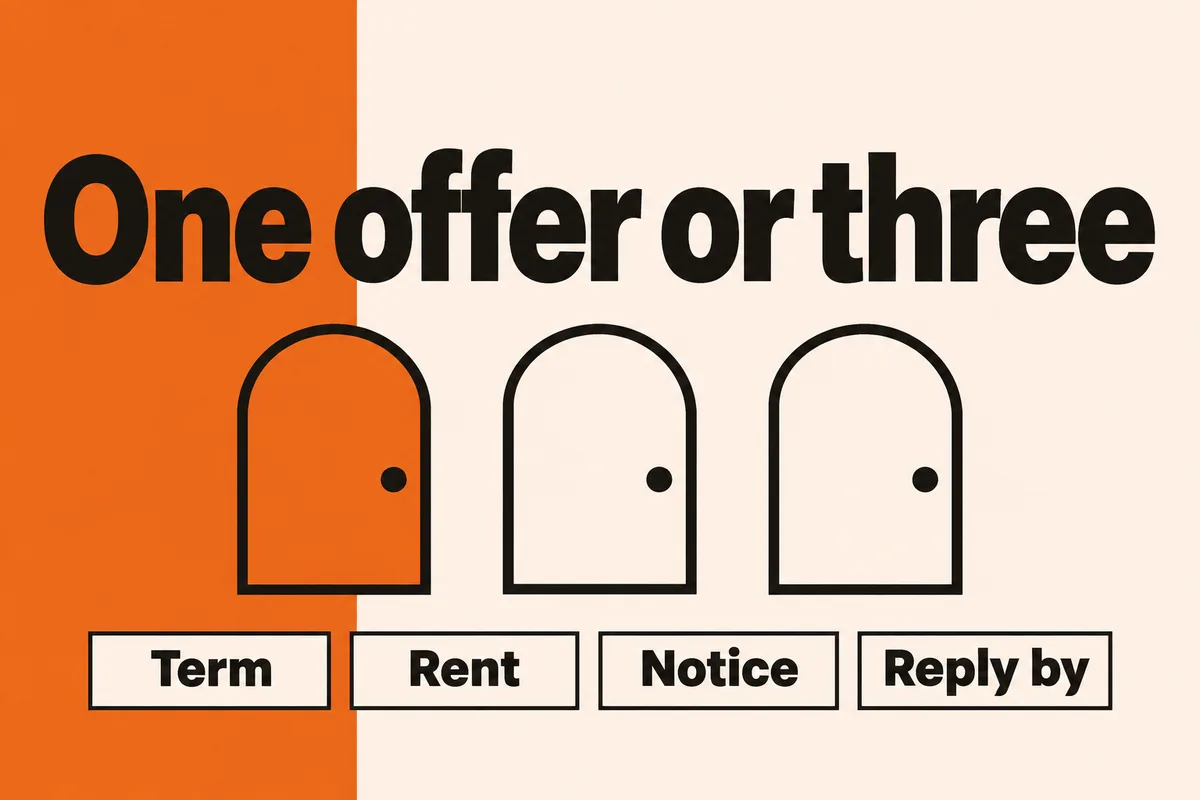
Why the number of options matters
A renewal offer is a small sales conversation with a person who already lives in the property. They know the unit, the building and you. What they do not know is what they will pay next, how long they can stay and what happens if they say nothing. The way you present the offer decides how many of them answer quickly, how many go quiet and how many leave because the choice felt like a hassle. It is one of our lease renewal guides.
More options feel generous, and sometimes they are. They also create work. Each option has to be priced, approved by the owner, written clearly and tracked in your system. Each one gives the resident a chance to compare and delay. A resident who is weighing three offers is not deciding to stay. They are deciding whether the effort is worth it, and the easiest decision is to do nothing and see what happens. For market context, the Census Bureau's Housing Vacancy Survey publishes rental vacancy rates, which is background for the rents you offer, not a pricing rule; local comparables set the numbers.
A single offer is easier to read and easier to answer. A short menu helps when the resident has a real reason to want something different, such as a shorter term. The right number depends on the property, the resident and the owner. This guide helps you choose, and the lease renewal letter template gives you the letter itself.
This is a working guide, not legal advice. Notice periods for renewal offers and rent changes, limits on rent increases, required wording, month to month rules and local rent regulations depend on your lease and on state and local law. Check yours with your own counsel before you send an offer. The amounts and terms you offer are set by you and the owner.
When one offer is enough
Use a single offer when the resident is a good one and you want a quick yes. A resident who pays on time, looks after the unit and rarely calls does not need a menu. They need a clear letter with the new term, the new rent, what stays the same and a date to reply. Making the choice small makes a yes easy.
One offer also fits when the owner has a clear plan. If the owner wants a standard twelve month term to line up with the local leasing season, there is little to offer beyond that, and presenting false choices would only invite negotiation you cannot approve. The same goes for a property where your rules or local rules limit what can change. If there is only one lawful, approved offer, send one.
The risk of a single offer is that it is take it or leave it. If the resident needs something different, such as a shorter stay or a different date, they may leave without asking. A line at the end that invites a call if the term does not suit them handles most of that without turning the letter into a menu.
When two options fit
Two options is the most common good answer. The usual pair is the standard term and an alternative that serves a real need. A longer term at one rent and a shorter term at another. A standard renewal and a month to month arrangement. The point is that each option is something you and the owner would be happy to sign.
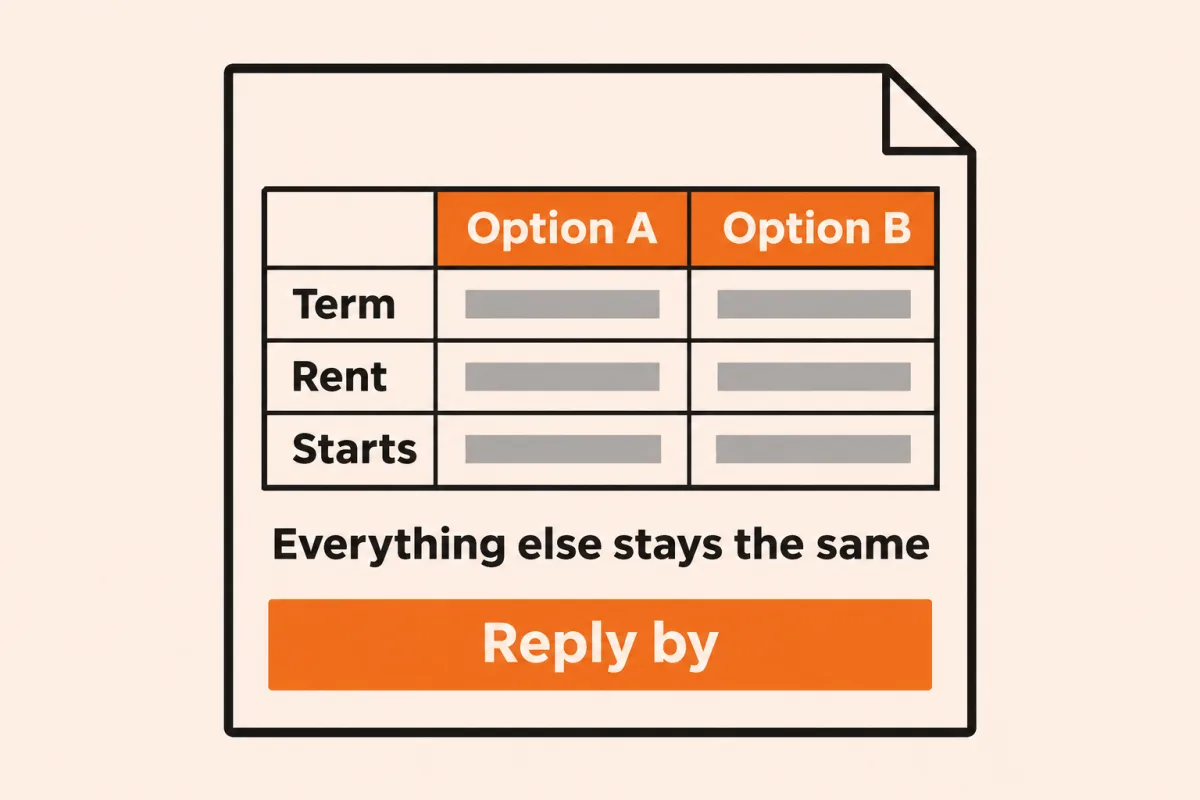
Set the options so the difference is clear and honest. If a shorter term costs more per month, say why: it is harder to plan a vacancy, and a shorter term leaves a turnover at a less convenient time. Owners usually accept that a resident who wants flexibility pays for it, and residents usually understand when it is explained. Do not hide the difference in the details. Put both options side by side in one table.
Two options also keep the reply simple. The resident picks A or B, or calls. You can track the answer in a single field. If you are weighing a rent change as part of the offer, read the rent increase notice letter template first, because notice rules may apply to the change as well as to the renewal.
When three options work, and when they do not
Three options can work when the resident has a real range of needs and you have an owner who has approved all of them. A familiar shape is a short, a standard and a long term, with the longest offering something of value in return for the commitment, such as a fixed rent for the whole term or a scheduled improvement. The owner decides what is on offer. You do not make up a perk.
Three options fail when the choices are not meaningfully different, or when one of them is a decoy. Residents notice. A menu built to steer people toward the middle option reads as a trick, and a trick in a renewal letter costs trust you will need later. Three also fails when your system cannot track it, or when the staff who answer the phone cannot explain the difference.
Do not go past three. Beyond that, each added choice lowers the share of residents who answer at all. If you find yourself drafting a fourth, it is a sign that the owner has not decided what they want. Go back to the owner, settle the terms and then write the letter. Our guide on non-renewal letters covers the other path, where the answer to the question of renewal is no.
Choosing how many options
Each option must be something you and the owner would sign.
What each option should and should not change
An option should change the things that really differ: the term, the rent for that term and, where the owner agrees, a defined benefit. It should not change the lease's other terms unless you mean to, and if it does, the letter should say so. A resident who signs a renewal expecting the same rules and finds a new fee or clause has a reason to be upset.
Say what stays the same. Most residents want to know that the deposit, the rules and the other terms carry over unless the letter says otherwise. That one sentence does more to reduce anxiety than any promotional line. If your lease or local rules require specific wording about the renewal, rent change or the end of the existing term, include it as your counsel advises.
Set a reply date, and say what happens if the resident does not reply. Your lease and local rules may say what happens by default at the end of the term, for example a move to month to month. Do not invent a default in the letter. State what your lease says and what you will do, with your counsel's help. Our Lease Renewal Agent keeps track of reply dates and drafts the follow-up.
A letter with two options
Replace every bracket with a term, rent and date the owner has approved and your counsel has checked. If you send only one option, delete the table row and the second paragraph.
Your lease at [address, unit]: renewal options
Hello [resident name],
Your current lease ends on [date]. We would like you to stay, and we have two options. Everything else in your lease stays the same unless this letter says otherwise.
Option A: [term] at [rent per month], starting [date].
Option B: [term] at [rent per month], starting [date]. [One sentence on why the terms differ.]
Please tell us which you prefer by [reply date], by [reply, call or portal]. If neither works, call [name, phone] and we will talk it through. If we have not heard from you by [reply date], [what your lease provides, as your counsel confirms].
Thank you for being a good neighbour. [name, company]
Send it in the way your lease allows for notices, keep a copy and record the date. The rent increase notice letter template covers sending a rent change on its own where the rules require that.
A walkthrough: a resident who wants to stay, but not for a year
Say a resident has lived in a unit for a while and always paid on time. Their lease ends soon. They have mentioned that their job may move them, so a twelve month term makes them nervous. The owner wants the unit occupied through the local leasing season and is happy with this resident.
The property manager checks the lease and local rules on notice and rent changes, then asks the owner what is acceptable. The owner approves a standard term at one rent and a shorter term at a higher rent, and will not agree to month to month. The manager does not offer a third option that was not approved.
The letter goes out with both options in the table, a plain sentence on why the shorter term costs more and a reply date. The resident calls the next day and says the shorter term fits. The manager sends the signed paperwork, notes the new end date and adds the unit to the list of vacancies to plan for around that date. A resident who might have left chose to stay, and the owner knows when to expect the next turnover.
Had the resident wanted something the owner did not approve, the manager would have said so honestly and offered the two real options. The manager would not have promised anything on the call. If the resident left, the move-out checklist is the next step.
Common mistakes
Offering terms the owner has not approved. Never put a figure or a perk in a letter until the owner has said yes in writing.
Making the options a trick. If one choice is only there to make another look good, residents notice. Offer options you would be glad to sign.
Burying what changes. If the new lease changes a rule or a fee, say so in the letter. Do not leave it for the resident to find in the document.
No reply date or no follow-up. Silence is not an answer. Set a date, follow up once or twice, and record each contact.
Sending it too late. Check your lease and local rules for how early the offer must go out, then send it earlier than that. Late offers leave no room to find a new resident if the answer is no.
How to adapt it
For a portfolio of single family homes, each decision is individual, and one or two options fit well. For a larger building, a standard pair of options sent to everyone is easier to run, with exceptions handled by a person. If your area has rent regulation, offers may be limited to what the rules allow, and that may leave one lawful option. Ask your counsel before you build a template.
If a resident is behind on rent or has had repeated violations, a renewal offer is a decision for the owner and your policy, and it may belong in a different letter. Do not send a generic offer to someone you do not intend to renew. The non-renewal letter template and your counsel cover that.
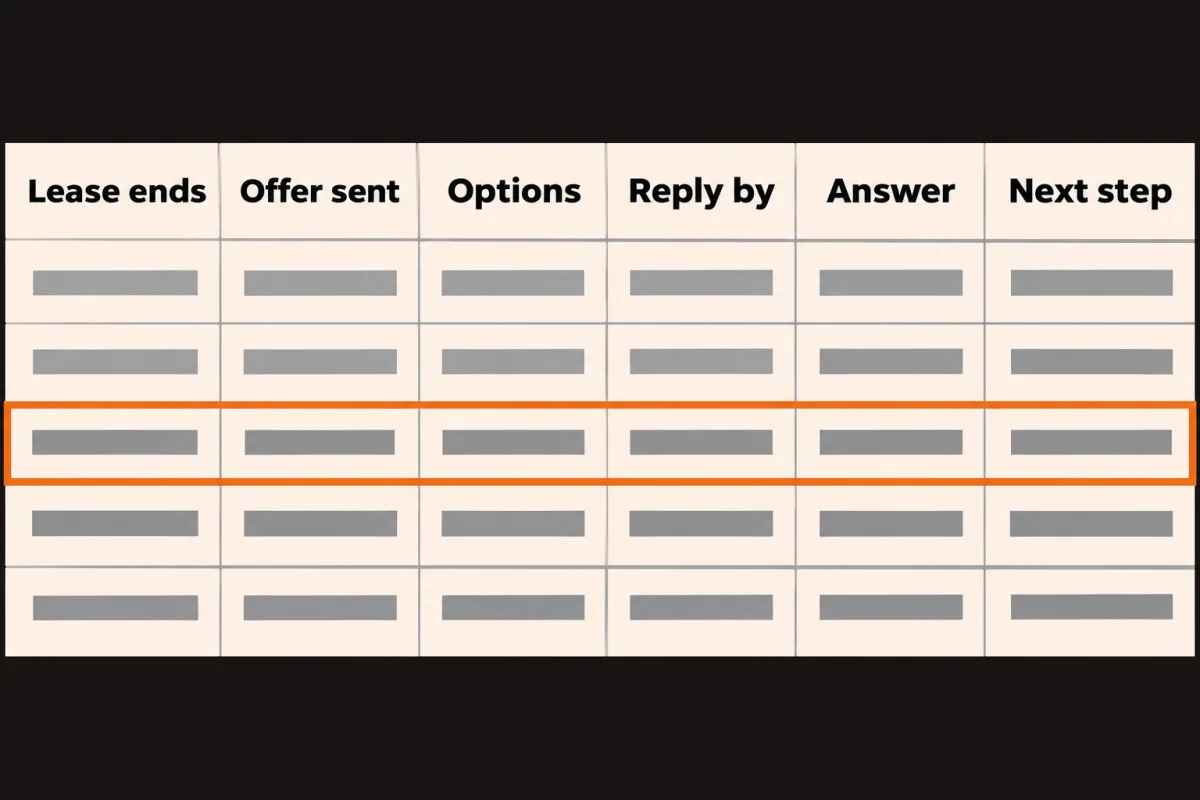
AppFolio, Buildium, DoorLoop and Rent Manager can each track lease end dates and send renewal campaigns, and some can record the option a resident chose. Set up a view that shows every lease ending in the next several months and the status of each offer, so nothing sits unanswered.
Where AI helps and where a person decides
AI helps with drafting and tracking. Give ChatGPT or Claude the approved terms for a unit, with the resident's name and details removed, and ask for the letter in your format, a plain explanation of the difference between the options and a short follow-up message for residents who have not replied. It can turn a list of leases ending into a schedule of when to send each letter and when to follow up.
A person decides the terms, the rent and who gets an offer. A model must not choose a rent, promise a discount or state what the law requires. Do not let it invent a benefit for a longer term. Check every date and figure against the owner's approval, and have your counsel review the template once.
Below are the approved renewal terms for one unit, with identifying details removed: lease end date, option A term and rent, option B term and rent, what stays the same, the reply date and what our lease says happens if there is no reply. Draft (1) a renewal letter with both options in a short table, (2) one sentence explaining why the options differ, (3) a follow-up message for a resident who has not replied after [number] days. Do not add any term, perk, figure or legal statement that is not in the text. If something is missing, write MISSING. [paste approved terms]Read each draft against the approval, then send it by the method your lease allows. The Lease Renewal Agent works the same way: it drafts and tracks, and a person approves.
Before a renewal offer goes out
- The owner approved every term and rent in writing.
- You checked notice timing and rent change rules in your lease and local law, with counsel.
- There are no more than three options, and each is something you would sign.
- The letter says what stays the same and what changes.
- A reply date is set, and the letter states what your lease says if there is no reply.
- The offer is sent the way your lease requires, and a copy is filed.
- A follow-up is scheduled for residents who have not replied.
Questions
How many renewal options should you offer a tenant?
One clear offer for a good resident and a quick yes, two when a real alternative such as a shorter term helps, and three only when the owner approved a real range. Do not go past three.
Should a lease renewal offer include a shorter term?
Only if the owner will accept it. Explain honestly why the rent differs for a shorter term, and keep the options to terms you would be glad to sign.
What should a lease renewal letter say?
The new term and rent, what stays the same, a reply date, what happens if there is no reply under your lease and a contact for questions. Have counsel check required wording and timing.
Can AI write a lease renewal offer?
It can draft the letter and the follow-up from terms the owner approved. A person sets the terms and rent, checks every figure and sends it as your lease requires.